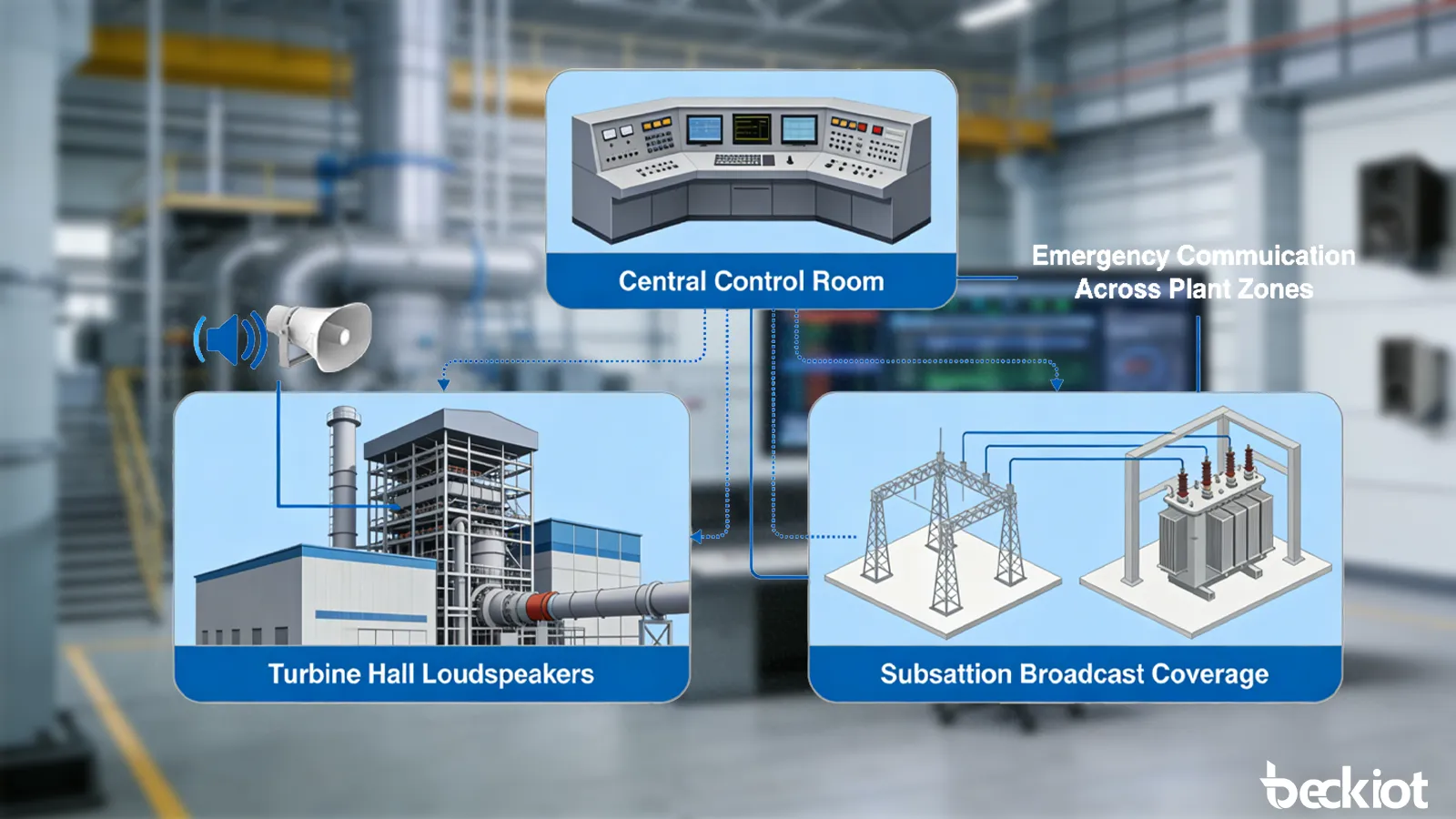
Электростанции и подстанции нуждаются в надежных системах голосовой связи для поддержки как повседневной эксплуатации, так и реагирования в чрезвычайных ситуациях. В диспетчерских залах, турбинных залах, котельных помещениях, коридорах для транспортировки угля, распределительных устройствах, кабельных туннелях, вспомогательных цехах и на открытых участках с оборудованием операторам требуется единая платформа, обеспечивающая четкую и быструю передачу повседневных объявлений, зонального оповещения, общего тревожного сигнала и инструктажей по эвакуации. В таких условиях связь выступает не только как эксплуатационный инструмент, но и как критически важная часть обеспечения безопасности объекта, координации персонала и управления инцидентами.
Профессиональноерешение на основе системы PAGA для энергетических объектовобъединяетгромкое оповещение,пейджингиобщий тревожный сигналв единую централизованную коммуникационную платформу. Она помогает операторам электростанций передавать объявления о сменах, сообщения о техническом обслуживании, инструкции для отдельных зон, чрезвычайные предупреждения и голосовые команды в режиме реального времени по всей территории объекта. Вместо использования разрозненных и изолированных каналов связи решение формирует единую скоординированную инфраструктуру для повседневной эксплуатации электростанции и реагирования на нештатные ситуации.
Компания Becke Telcom предлагает промышленные коммуникационные решения для сложных и критически важных условий эксплуатации. Для проектов в сфере генерации и распределения электроэнергии решение интегрирует систему PAGA, промышленные телефоны, SIP-связь, экстренную переговорную связь, диспетчерскую координацию и взаимодействие с третьими системами в масштабируемую общеобъектовую сеть безопасности связи.
В условиях энергетической отрасли существует ряд коммуникационных проблем, из-за которых обычные системы оповещения оказываются недостаточными. Объекты часто имеют большую площадь, разделены на зоны и работают в непрерывном режиме. Разные участки — турбинные залы, котельные помещения, системы транспортировки топлива, кабельные туннели, подстанции, релейные залы, насосные помещения, зоны водоочистки и открытые дворы — имеют разные условия шума, эксплуатационные приоритеты и требования безопасности. Поэтому связь должна обеспечивать как широкое покрытие, так и точное зональное управление.
В обычном режиме эксплуатации система может использоваться для объявлений о смене смен, инструкций по техническому обслуживанию, напоминаний о безопасности, координации отключений и общеобъектовых уведомлений. При чрезвычайных ситуациях она должна быстро передавать пожарные предупреждения, оповещения о неисправностях оборудования, уведомления о запрещенных зонах, сообщения о эвакуации персонала и прямые инструкции операторов. Эти потребности требуют платформы, обеспечивающей четкую передачу речи, управление приоритетами, мониторинг системы и интеграцию с общеобъектовыми системами управления и безопасности.
Большие и распределенные зоны объекта с множеством функциональных участков
Высокий фоновый шум в турбинных залах, котельных помещениях и участках транспортировки топлива
Сложные промышленные условия: высокая температура, влажность, пыль, вибрации и открытые участки
Непрерывная эксплуатация, требующая высокой доступности системы
Необходимость объединения повседневной производственной связи и экстренных тревожных сигналов на одной платформе
Требование интеграции с пожарной сигнализацией, системами видеонаблюдения, телефонией и системами управления
На энергетических объектах связь должна не просто достигать людей, но и поступать в нужную зону, в нужное время с нужным приоритетом.
Система PAGA для энергетических объектов выступает как централизованная основа голосовой связи для эксплуатации объекта и реагирования в чрезвычайных ситуациях. Она поддерживает повседневное громкое оповещение, зональный пейджинг, общий тревожный сигнал, воспроизведение предзаписанных экстренных сообщений и прямые объявления из диспетчерского зала. Для операторов электростанции она становится практичным инструментом для поддержания порядка при обычном производстве и повышения скорости реагирования при возникновении нештатных ситуаций.
В реальных проектах платформа PAGA обычно является частью более широкой промышленной коммуникационной структуры. Она может работать совместно с промышленными телефонами, SIP-системами связи, терминалами экстренной переговорной связи, системами видеонаблюдения, пожарной сигнализацией, DCS, SCADA и диспетчерскими платформами электростанции. Такая интеграция делает решение более ценным по сравнению с изолированной сетью громкоговорителей, поскольку связь может реагировать на реальные события на объекте и поддерживать скоординированные действия.
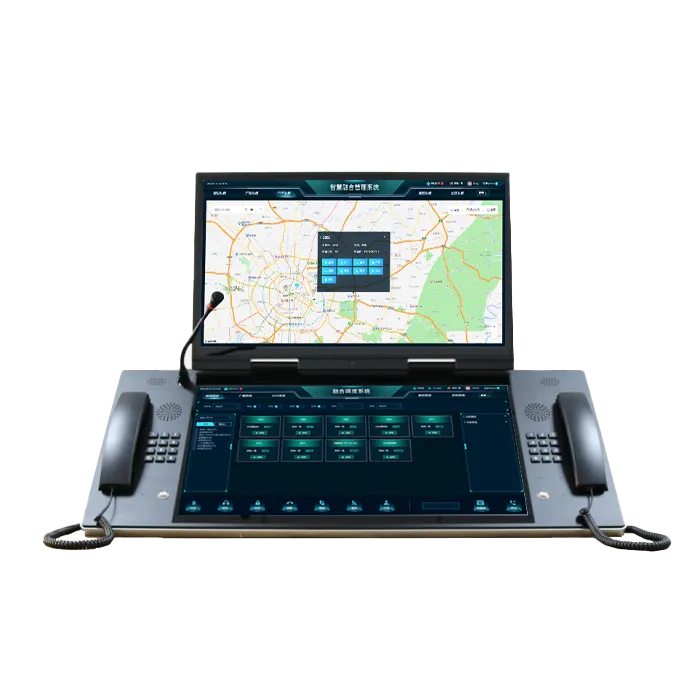
Централизованная управляющая платформа является ядром системы. Она управляет маршрутизацией оповещений, определением зон, логикой приоритетов, обработкой событий, расписанием и мониторингом системы. Обычно она располагается в главном диспетчерском зале, эксплуатационном центре или диспетчерской комнате. Для критически важных проектов управляющая платформа может поддерживать резервированное развертывание для повышения непрерывности работы.
Пульты пейджинга позволяют авторизованному персоналу передавать прямые объявления в одну зону, несколько зон или по всей электростанции. Рабочие станции операторов также могут обеспечивать мониторинг тревог, регистрацию событий, обработку вызовов и функции управления системой. Эти терминалы важны как для повседневной координации на объекте, так и для управления экстренной связью.
Уровень аудиовыхода включает промышленные усилители и распределенные громкоговорители, установленные во внутренних и наружных зонах электростанции. В зависимости от акустических и экологических условий в проекте могут использоваться рупорные громкоговорители, настенные громкоговорители, колонные громкоговорители или промышленные наружные громкоговорители. В отдельных зонах могут быть выбраны дополнительные усиленные или адаптированные для объекта типы громкоговорителей в соответствии с требованиями проекта.
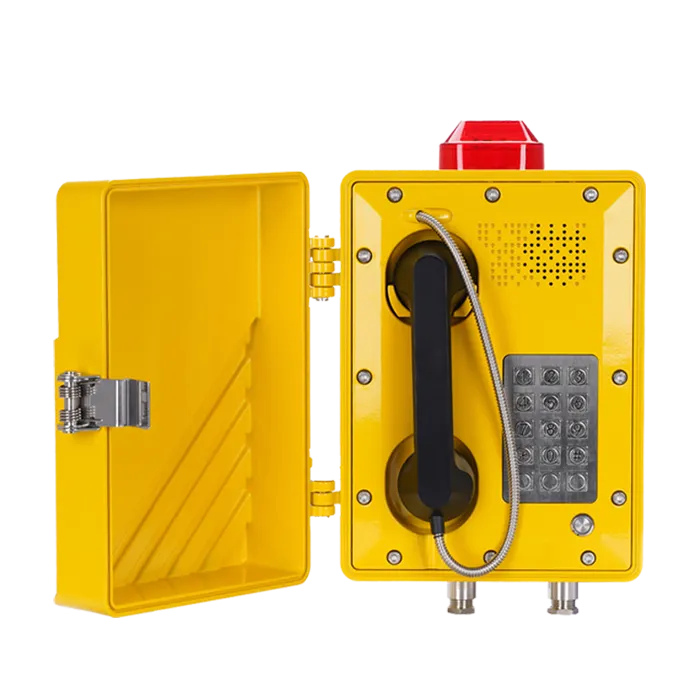
Конечные устройства экстренной связи, такие как промышленные телефоны, SIP-терминалы или переговорные устройства, могут быть установлены в производственных зонах, служебных коридорах, подстанциях, кабельных туннелях, вспомогательных цехах и запрещенных рабочих зонах. Эти терминалы дополняют общеобъектовое оповещение, поддерживая прямую связь между полевым персоналом и центром управления.
Система может записывать прямые объявления, активацию тревог, события пейджинга и отдельные эксплуатационные действия для последующего анализа. Эти записи поддерживают обучение персонала, реконструкцию инцидентов, требования аудита и улучшение коммуникационных процессов.
Модули интерфейса соединяют платформу PAGA с другими системами объекта: пожарной сигнализацией, системами видеонаблюдения, SIP-телефонией, DCS, SCADA и диспетчерскими платформами. Такое взаимодействие позволяет коммуникации на объекте реагировать быстрее и разумнее на реальные события.
| Компонент | Основная роль | Типичное место установки |
|---|---|---|
| Централизованная управляющая платформа | Управление зонами, контроль оповещений, логика тревог, мониторинг системы | Главный диспетчерский зал, эксплуатационный центр |
| Пульт пейджинга | Прямые объявления, зональный пейджинг, экстренное голосовое командование | Диспетчерский стол, рабочая станция оператора, дежурная комната |
| Промышленный усилитель и сеть громкоговорителей | Повседневное оповещение, вывод тревожных сигналов, сообщения о эвакуации | Турбинный зал, котельное помещение, коридоры, подстанции, открытые дворы |
| Терминал экстренной связи | Прямая голосовая связь и сообщение о инцидентах | Служебные зоны, кабельные туннели, цехи, запрещенные зоны |
| Модуль интерфейса | Интеграция с пожарной сигнализацией, системами видеонаблюдения, DCS, SCADA и телефонией | Системный уровень, оборудованная комната, управляющая платформа |
Система поддерживает повседневную коммуникацию на объекте за счет регулярного голосового оповещения. Типичные области применения: объявления о смене смен, расписание технического обслуживания, координация отключений, напоминания о безопасности, рабочие инструкции и общие эксплуатационные объявления. Это помогает организовать связь между разными отделами электростанции и полевыми участками.
Разным зонам электростанции часто требуются разные сообщения. Поэтому решение поддерживает зональный пейджинг, позволяющий операторам передавать инструкции только в соответствующую зону. Это снижает ненужные помехи и повышает точность сообщений.
Типичные зоны оповещения и пейджинга включают:
Главный диспетчерский зал
Турбинный зал
Котельное помещение
Коридор для транспортировки угля
Зона водоочистки
Вспомогательный цех
Подстанция и распределительное устройство
ГИС-зал или зал релейной защиты
Кабельный туннель
Пункт сбора при эвакуации
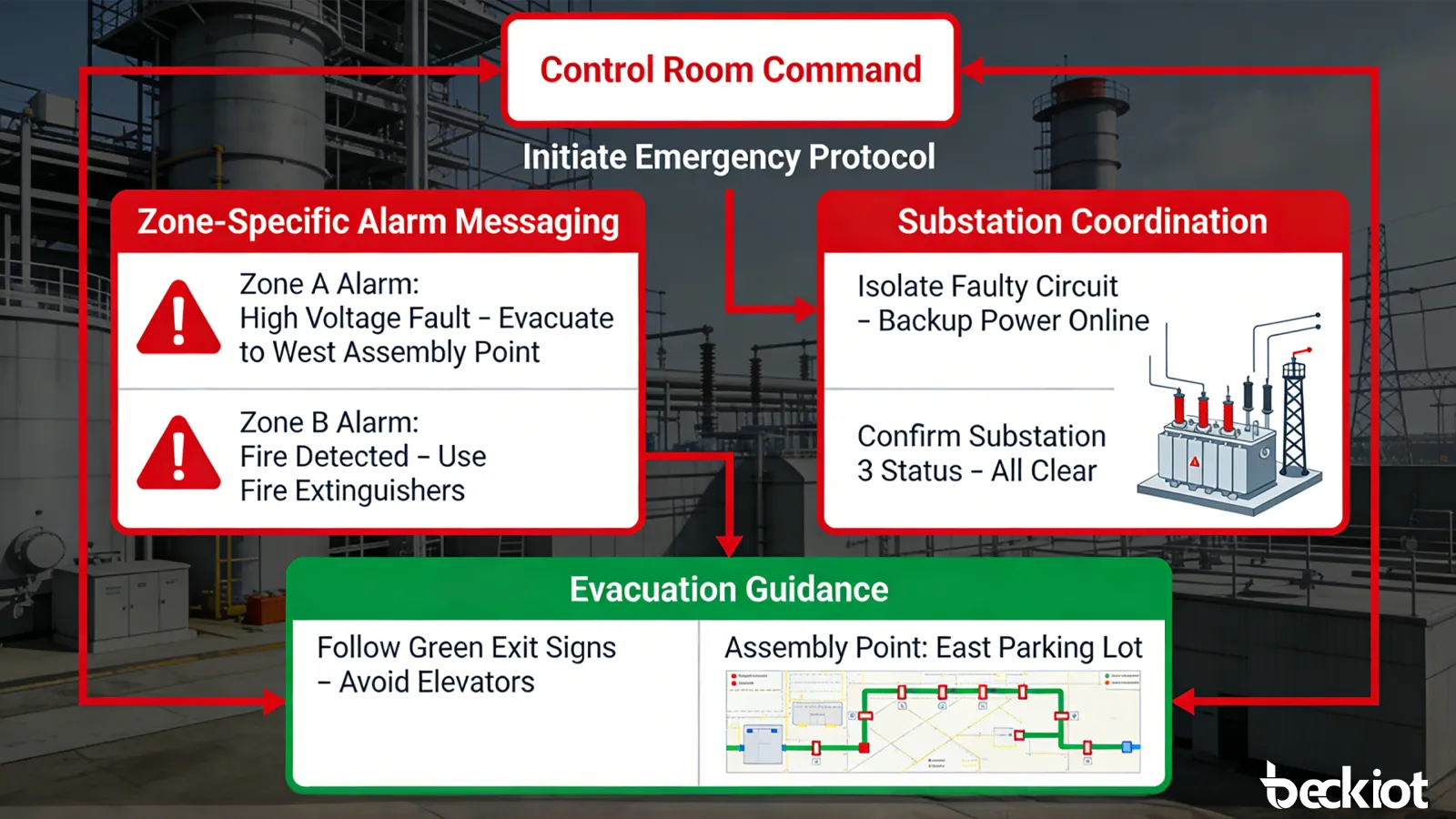
При возникновении серьезного инцидента система может активировать общий тревожный сигнал по всей электростанции или в отдельной зоне. Эта функция используется при пожарах, электрических неисправностях, отказах оборудования, управлении запрещенными зонами, приказах на эвакуацию или крупных эксплуатационных отклонениях. Возможность передачи общего тревожного сигнала особенно важна на объектах, где требуется быстрое информирование нескольких зон.
Решение поддерживает как предзаписанные, так и прямые экстренные сообщения. Предзаписанный контент обеспечивает быструю и единообразную передачу инструкций, а прямые объявления позволяют операторам реагировать на изменяющиеся ситуации. Типичные экстренные сообщения включают инструкции по эвакуации, предупреждения об опасности, уведомления о неисправностях оборудования, объявления о запрещенных зонах и экстренные указания для полевых бригад.
Операторы диспетчерского зала или диспетчерского центра могут передавать прямые сообщения в одну зону, несколько зон или по всей электростанции. Это полезно при быстром изменении инцидентов, требующих ручного руководства. Прямой пейджинг обеспечивает более быструю координацию с бригадами технического обслуживания, эксплуатационным персоналом, службой безопасности и подрядчиками на объекте.
Система может назначать разные приоритеты повседневным объявлениям, прямому пейджингу, экстренной связи и тревожным сообщениям. Контент с высоким приоритетом (тревожные сигналы) автоматически заменяет обычные аудиосообщения с низким приоритетом, гарантируя первоочередную передачу критических инструкций.
Записи объявлений и журналы событий тревог могут сохраняться для эксплуатационного анализа и изучения инцидентов. Функции воспроизведения помогают менеджерам объекта проверять правильность коммуникационных действий, улучшать процедуры и поддерживать программы обучения на основе реальных эксплуатационных ситуаций.
Решение позволяет контролировать состояние усилителей, линий громкоговорителей, терминалов, сетевых соединений и ключевых зон. Централизованный мониторинг состояния помогает бригадам технического обслуживания своевременно выявлять неисправности и поддерживать высокую готовность связи по всей электростанции.
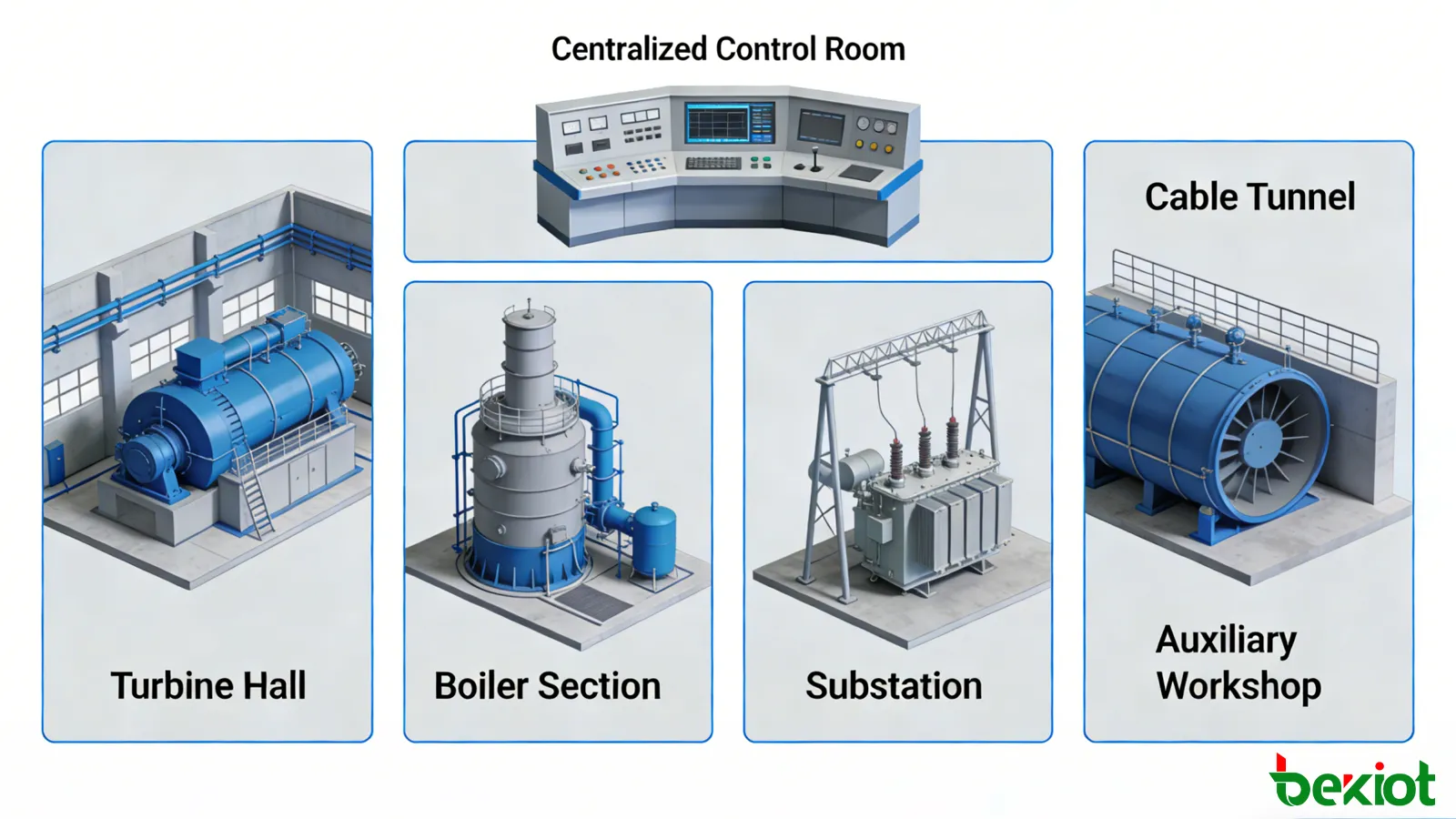
Планирование развертывания должно соответствовать планировке объекта, рискам технологических процессов, перемещению персонала, условиям шума и проектированию экстренных маршрутов. В энергетических условиях покрытие связью должно выходить далеко за офисные здания и включать технические и эксплуатационные зоны, где происходит реальная производственная деятельность.
Типичные зоны развертывания включают главный диспетчерский зал, турбинный зал, котельное помещение, зону транспортировки угля, зону удаления золы, кабельный туннель, зону водоочистки, вспомогательный цех, насосное помещение и места экстренного сбора. Эти зоны нуждаются в надежной повседневной связи, а также в покрытии высокоприоритетной экстренной голосовой связью.
На подстанциях и открытых распределительных объектах система может покрывать распределительные устройства, зоны трансформаторов, ГИС-залы, залы релейной защиты, кабельные каналы, эксплуатационные комнаты и открытые дежурные зоны. Эти пространства требуют четкой и надежной поддержки связи как для эксплуатационных инструкций, так и для реагирования на нештатные ситуации.
Служебные коридоры, помещения технического обслуживания, технические зоны и зоны с ограниченным доступом также получают выгоду от интегрированной поддержки связи. Часто именно в этих зонах координация между диспетчерским персоналом и полевыми работниками становится наиболее важной при инспекциях или обработке неисправностей.
| Зона развертывания | Основная потребность в связи | Рекомендуемая роль системы |
|---|---|---|
| Турбинный зал / Котельное помещение | Производственная координация, уведомления о безопасности, экстренные предупреждения | Повседневное оповещение и передача тревожных сигналов с высоким приоритетом |
| Зона транспортировки угля / Вспомогательный цех | Уведомления о техническом обслуживании, рабочие инструкции, зональный пейджинг | Зональное громкое оповещение и прямой пейджинг операторов |
| Подстанция / Распределительное устройство | Эксплуатационная связь и уведомления о неисправностях | Распределенный пейджинг и связь с тревожными сигналами |
| Кабельный туннель / Технический коридор | Поддержка инспекций, оповещения о инцидентах, полевая связь | Связанные терминалы связи и зональное оповещение |
| Диспетчерский зал / Диспетчерский центр | Централизованное командование и управление связью по всей электростанции | Пульт пейджинга, мониторинг системы, управление событиями |
| Зона экстренного сбора | Инструкции по эвакуации и экстренные указания | Голосовое оповещение с приоритетом и передача тревожных сообщений |
Ценность системы PAGA для энергетических объектов возрастает при интеграции с другими системами объекта. Это делает связь частью более широких эксплуатационных и безопасностных процессов, а не изолированным инструментом оповещения.
Интеграция с пожарной сигнализацией: пожарные события могут автоматически запускать предупреждающие сообщения и инструкции по эвакуации
Интеграция с системами видеонаблюдения: операторы могут проверять условия на месте при передаче инструкций и координации реагирования
Интеграция с DCS или SCADA: технологические события и тревоги объекта могут быть связаны с коммуникационными действиями
Интеграция с SIP-телефонией: эксплуатационная голосовая связь может быть расширена по более широкой сети объекта
Интеграция с диспетчерской платформой: бригады реагирования и операторы объекта могут координироваться более эффективно при инцидентах
Например, при срабатывании пожарной сигнализации в назначенной котельной зоне система может автоматически передать зональное предупреждение, уведомить диспетчерский зал и позволить операторам начать прямой пейджинг для эвакуации или эксплуатационной изоляции. Такой скоординированный поток связи снижает задержки и повышает четкость при событиях, требующих быстрой реакции.
В турбинных залах, котельных помещениях и участках транспортировки топлива связь должна оставаться понятной в условиях реального эксплуатационного шума. Поэтому при проектировании системы следует уделять внимание практической разборчивости, а не только уровню аудиовыхода.
Оборудование может подвергаться воздействию высокой температуры, влажности, пыли, вибраций и погодных условий на открытых участках. Выбор оборудования должен учитывать как пригодность к окружающей среде, так и долгосрочную надежность.
Энергетические объекты обычно имеют большую площадь и разделены на зоны. Коммуникационная платформа должна обеспечивать покрытие по всей электростанции, сохраняя при этом гибкую зональную передачу сообщений.
Для энергетической эксплуатации непрерывность связи имеет высокое значение. Резервированная архитектура для управляющих серверов, передающих сетей, источников питания и путей усилителей может повысить доступность и снизить эксплуатационные риски.
Решение должно поддерживать быструю активацию тревожных сигналов, немедленное воспроизведение сообщений и переход к прямому управлению операторами при изменении условий. Это особенно важно в ситуациях, когда время реагирования на инцидент напрямую влияет на безопасность объекта.
Платформа PAGA должна плавно интегрироваться с существующими системами объекта, чтобы избежать изолированных коммуникационных островов и улучшить координацию между уровнями управления, безопасности и эксплуатации.
Эффективное решение на основе системы PAGA для энергетических объектов — это не просто система громкоговорителей. Это общеобъектовая коммуникационная платформа для информирования, предупреждения, руководства и координации персонала как в обычном, так и в чрезвычайном режиме.
Компания Becke Telcom специализируется на промышленных коммуникационных решениях для сложных и требовательных условий эксплуатации. На электростанциях, подстанциях и энергетических объектах ее решение на основе системы PAGA разработано для поддержки повседневной эксплуатации и экстренного реагирования за счет единой масштабируемой архитектуры.
Решение интегрирует громкое оповещение, общий тревожный сигнал, промышленную телефонию, экстренную переговорную связь, SIP-связь, распределенные системы громкоговорителей и диспетчерскую координацию в единую управляемую коммуникационную платформу. Это помогает энергетическим операторам повысить эффективность связи, снизить разрозненность и укрепить общеобъектовые возможности безопасностной связи.
Единая архитектура для громкого оповещения, тревожных сигналов, телефонии, переговорной связи и диспетчерского управления
Гибкая зональная связь для сложных условий на объектах
Поддержка интеграции с пожарной сигнализацией, системами видеонаблюдения, DCS, SCADA и SIP-системами
Надежный дизайн промышленной связи для внутренних и наружных зон объектов
Масштабируемое развертывание для электростанций, подстанций и комплексных энергетических объектов
Для владельцев объектов, генподрядчиков (EPC), операторов и системных интеграторов профессиональное решение на основе системы PAGA для энергетики приносит пользу как в плане эксплуатационной эффективности, так и в управлении безопасностью.
Повышение эффективности голосовой связи по всей электростанции
Поддержка единого управления повседневным оповещением и экстренными тревожными сигналами
Повышение скорости реагирования при неисправностях и сценариях эвакуации
Укрепление координации между центрами управления и полевыми бригадами
Снижение задержек, путаницы и пропущенных инструкций при нештатных ситуациях
Поддержка более безопасной и управляемой эксплуатации энергетических объектов
Решение на основе системы PAGA для энергетических объектов является неотъемлемой частью современной системы безопасности связи на энергетических объектах. В условиях, когда шум, расстояние, непрерывность эксплуатации и давление экстренного реагирования влияют на качество связи, единая платформа для громкого оповещения, пейджинга и общего тревожного сигнала обеспечивает более надежный способ поддержки повседневной деятельности объекта и обработки инцидентов.
Объединяя повседневное оповещение, зональный пейджинг, общий тревожный сигнал, прямое голосовое командование и интеграцию систем в единую скоординированную архитектуру, энергетические операторы могут повысить эффективность связи, укрепить реагирование на угрозы безопасности и создать общеобъектовую коммуникационную платформу, лучше адаптированную к реальным промышленным условиям.
Это интегрированная система связи, объединяющая громкое оповещение, пейджинг и общий тревожный сигнал для поддержки повседневного оповещения, зональной голосовой связи и экстренных предупреждений на электростанциях и подстанциях.
Зональный пейджинг позволяет операторам отправлять сообщения только в соответствующую зону, повышая точность коммуникации и избегая ненужных помех в несвязанных участках объекта.
Да. Решение может передавать инструкции по эвакуации с помощью предзаписанных сообщений или прямых объявлений операторов в зависимости от типа инцидента и процедур объекта.
Да. Оно может интегрироваться с системами пожарной сигнализации, видеонаблюдения, DCS, SCADA, SIP-телефонией и диспетчерскими платформами для обеспечения более скоординированной связи и реагирования на объекте.